
Creative Projects
Many of Heleen’s creative projects begin long before a performance reaches the stage. Through a series of multidisciplinary performance productions—Cello for Africa, Cellists Aotearoa, and Tahu-nui-ā-Rangi—she explores questions of identity, belonging, place, and human connection.
Together, these projects examine who we are in relation to where we come from and where we belong. They explore how music and landscape can strengthen roots, connect people to place and to one another, and create meaningful experiences of connection and belonging.
Working alongside composers, performers, photographers, poets, scientists, community organisations, and cultural groups, Heleen develops projects that bring together music with visual media, literature, landscape, and lived experience. Through this collaborative process, the creative concepts underpinning each project become woven into the compositions themselves, shaping both the music and its performance.
The projects have resulted in the commissioning, performance, recording, and production of new works by South African and New Zealand composers. Many involved first performances, first recordings, and previously unexplored combinations of instruments, generating new repertoire, new collaborations, and new ways of bringing music into dialogue with landscape, literature, visual media, science, and cultural identity.
Collectively, they trace a journey from connecting to our heritage, to belonging in a new homeland, and ultimately to a larger universe of connections, with the natural world and our shared humanity. Through music, they create shared experiences that strengthen roots, connect people to place and to one another, and help us find a sense of belonging.
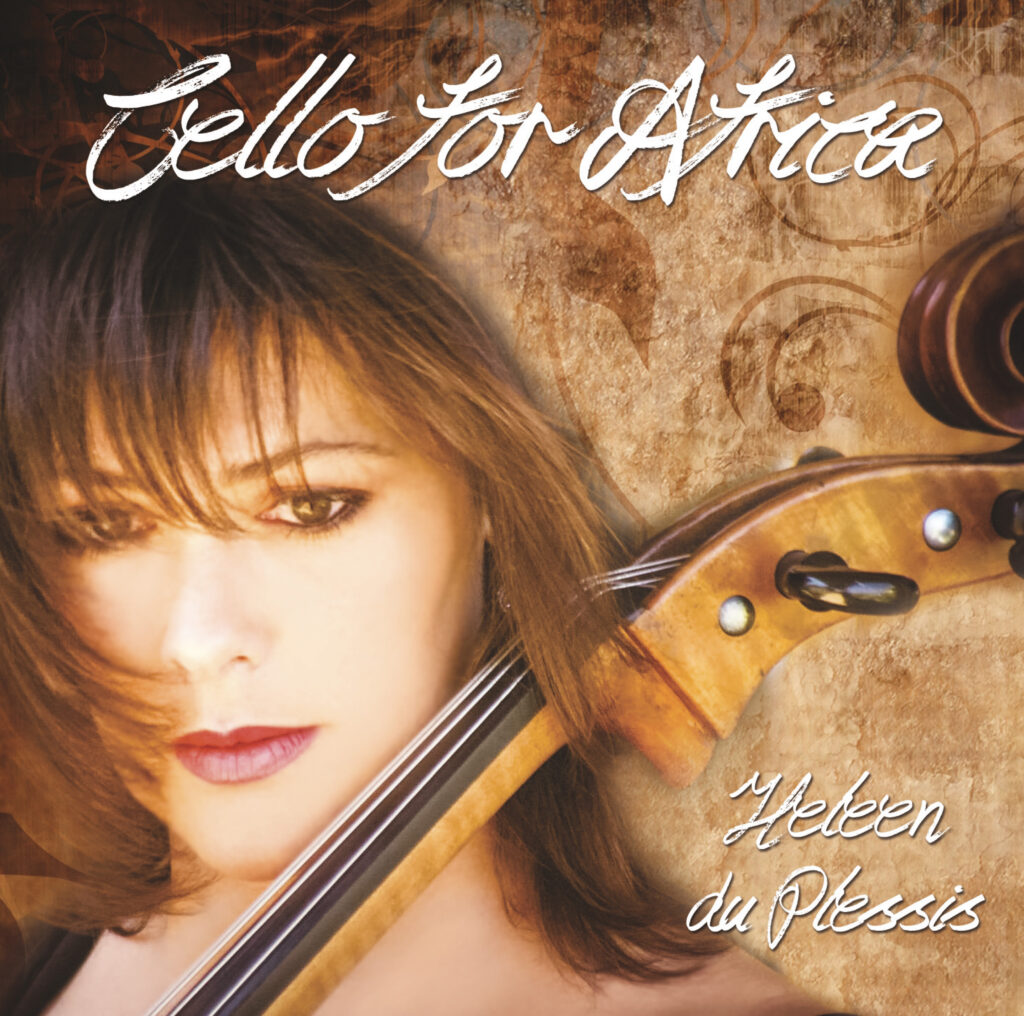
Cello for Africa (2013)
A musical journey of growth and transformation
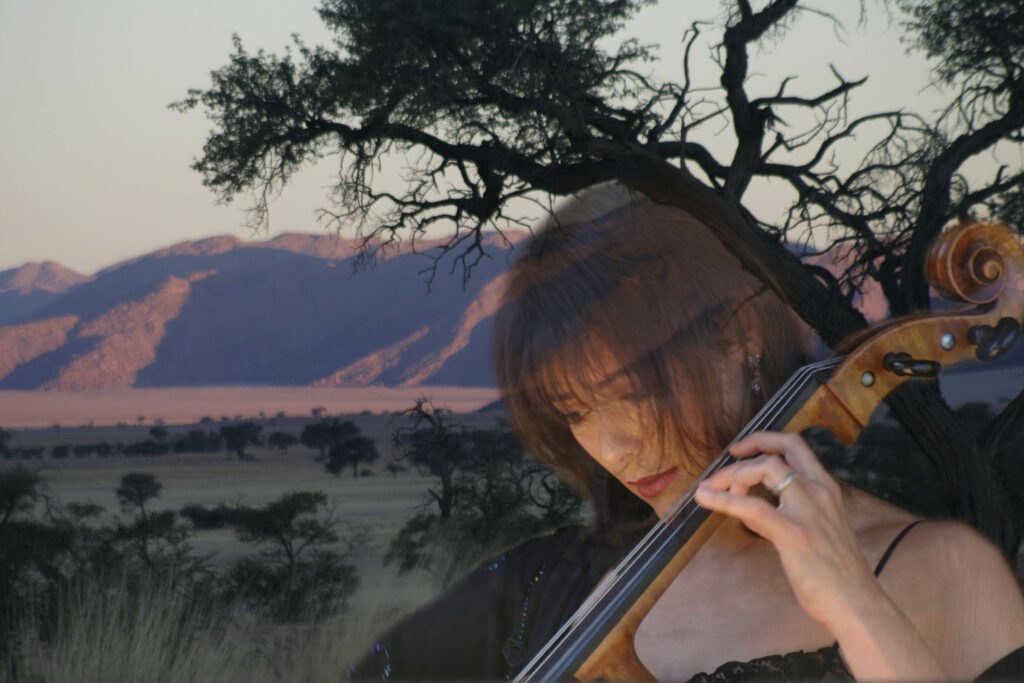
Born from the experience of emigration, Cello for Africa was both a musical journey and a search for belonging. Finding herself caught between the country she had left and the one she had not yet fully come to call home, Heleen turned to the cello as a means of reconnecting with her African roots and exploring questions of identity, loss, longing, and belonging.
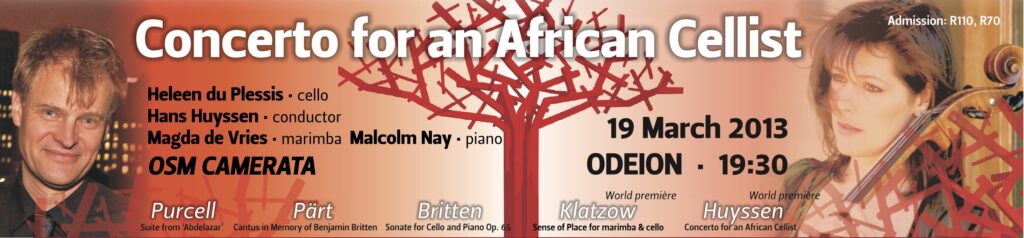
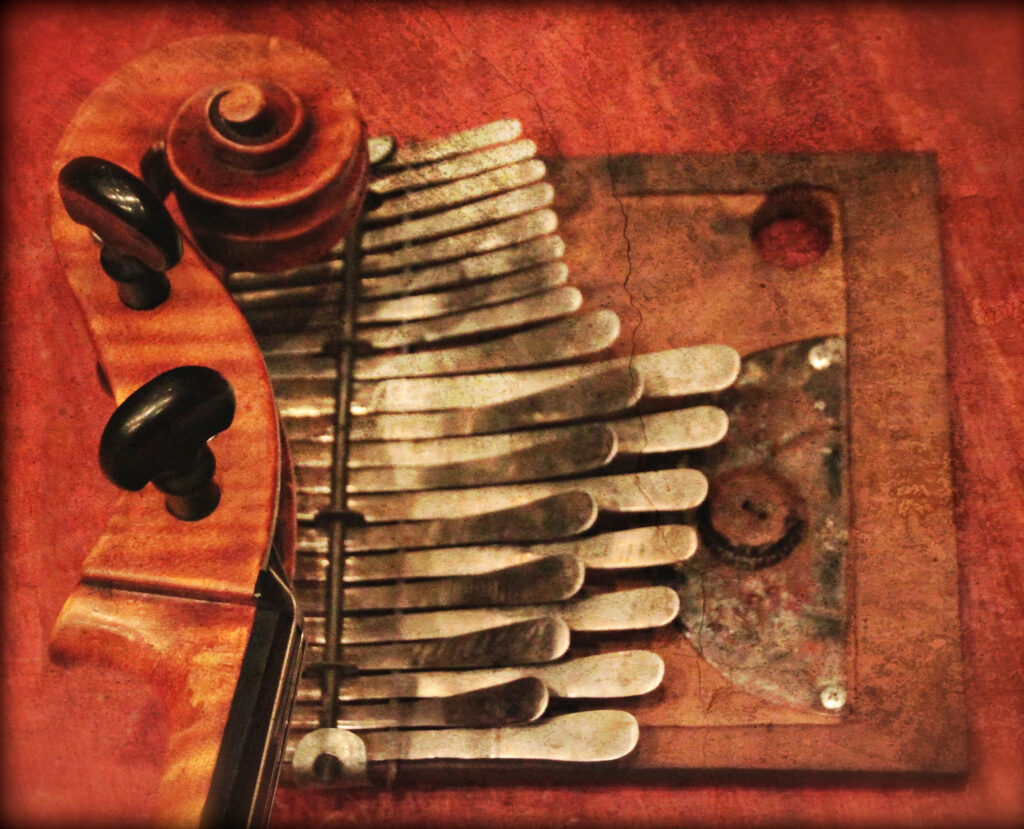
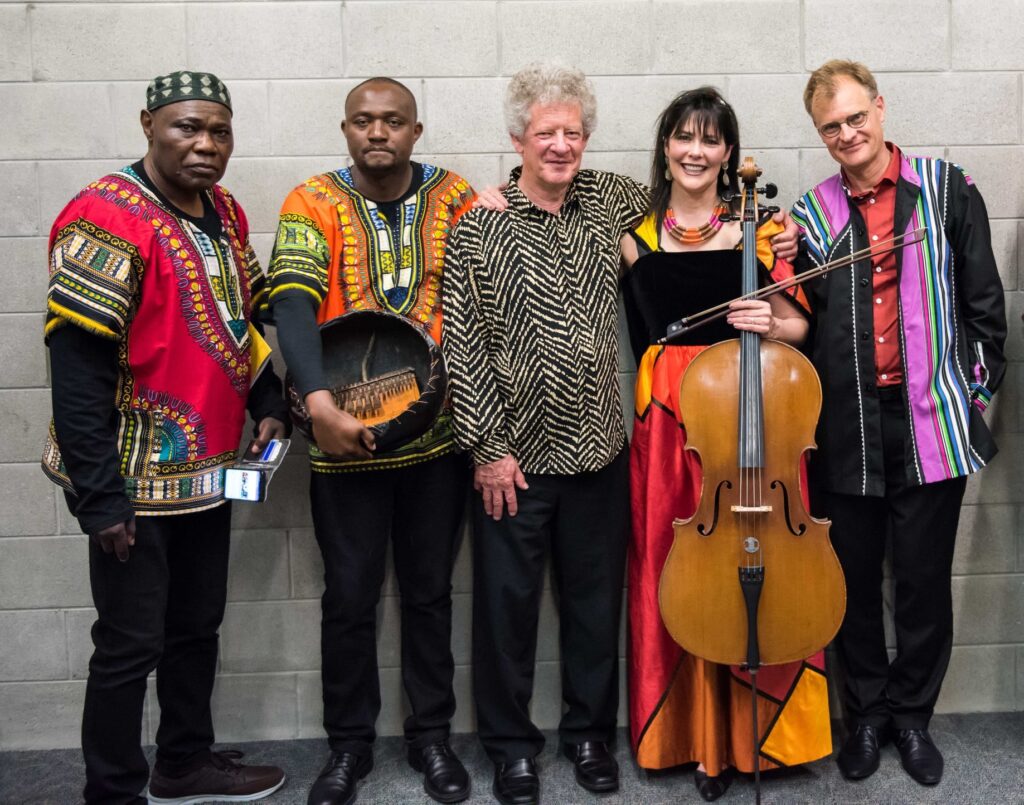
Bringing together South African composers, African instruments, Western classical traditions, and contemporary art music, the project created new spaces for cultural dialogue and exchange. Featured works included Hans Huyssen’s Concerto for an African Cellist for solo cello, orchestra, mbira, voice, and African percussion, Peter Klatzow’s A Sense of Place for cello and marimba, and his Sonata for Cello and Piano.
Rather than seeking to erase differences, the project celebrated them. The cello, mbira, marimba, orchestra, voice, and percussion engage in conversation, mirroring, contrasting, and responding to one another while retaining their own distinct identities. The result was an acclaimed CD recording and performance project described as “a genuine attempt to build a meaningful cross-cultural dialogue”
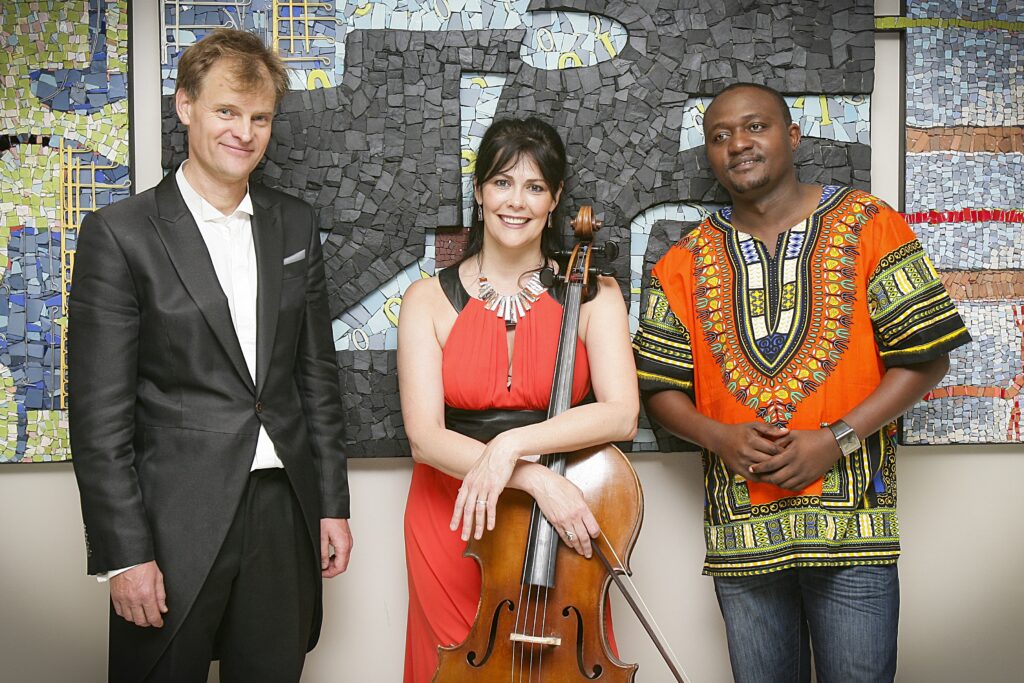
Lost without the conventional musical structures that I am used to rely on–Tinashe told me:

“Heleen, I hear you, and you hear me. We don’t speak the same language, but we understand each other… just let it out!” In the concert, as we turned to each other, the performance became a literal enactment of an inter-cultural connection through a musical conversation, of not only the cello and mbira but a magical moment of a true, captivating human dialogue.
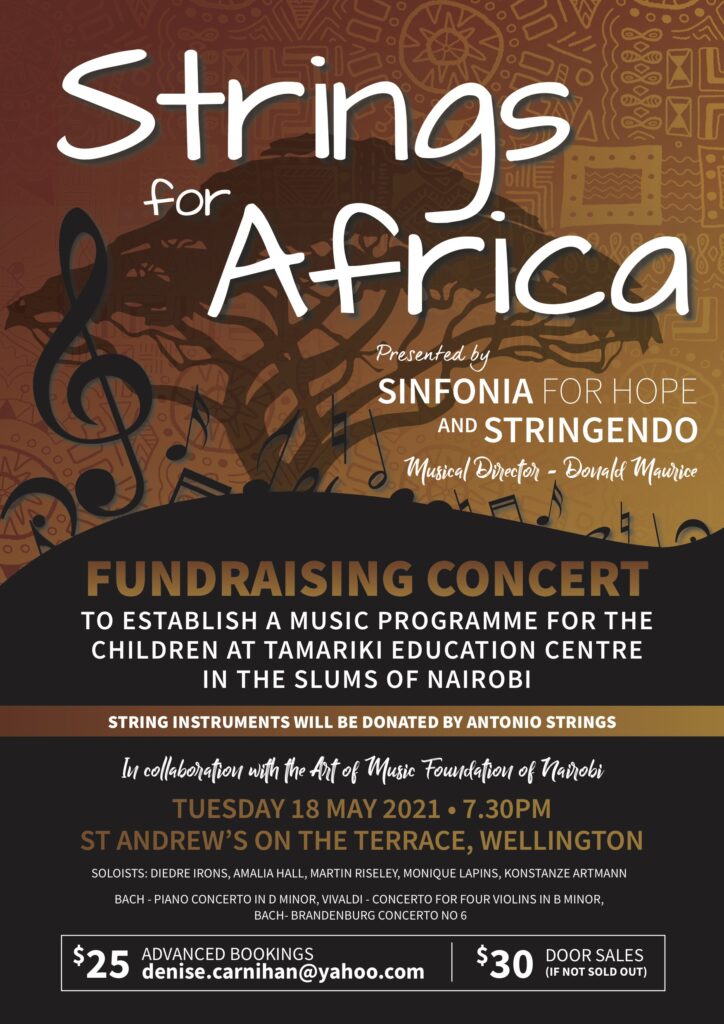
The project’s reach extended beyond South Africa. It later inspired Cello for Africa and Strings for Africa in New Zealand, a large-scale international collaboration directed by Sinfonia for Hope that brought together musicians from Africa and New Zealand in support of the Tamariki Education Centre in Nairobi. Through music, the project continued to build connections across cultures, communities, and continents, reflecting its central message:
“You hold the other within.”

Quotes:
“uniquely indigenous, enriching, universal and accessible; its contribution enormous; a wide range of dynamic and colour spectrums, soulful, lyrical, charged with passion and ambiance; the new tones and new colours contribute to world art not mere local colour”.
(Beeld)
“embodying the highest standard of artistry and a very genuine attempt to build a meaningful cross-cultural dialogue”
(The Violoncello Foundation, USA)
“Western Classical tones blend with exuberant native sounds throughout the disc; the highlight is it salutes another culture.
(Otago Daily Times)
“The culmination of a well-rounded, unique project”
(Volksblad)
“Your cello project has value in the advancement of initiatives in African music”
(Meki Nzewi)
“I experienced her performance of Huyssen’s Concerto for an African Cellist. She is an inspiring performer, and an outstanding soloist. Her playing speaks of great virtuosity and agility – but at the same time of a mature artistry – she has raised the cellistic bar with her powerful and extrovert, yet highly refined performances”
(Prof. Viljoen, HOD, Odeion School of Music)
“While du Plessis has covered the standard repertoire in multiple settings and prestigious venues, her special interest in music of Africa has made a deep impression on me. Her work to bring together elements of traditional African music and European art music has identified her as a leader in this genre”
(Professor Donald Morris, University of Victoria, NZ
‘Cello for Africa At Porirua a Spectacular and Moving Multi-Cultural Collaborative Event,
Middle C, Classical Music Reviews
Video of extracts
Concerto for an African Cellist – by Hans Huyssen
A Sense of Place for marimba and cello
– by Peter Klatzow
Sonata for Cello and Piano
– by Peter Klatzow
Cello for Africa
Cellists Aotearoa
Cellists Aotearoa created a musical experience that was ‘A Sound Sensation’ indeed!
— The Star
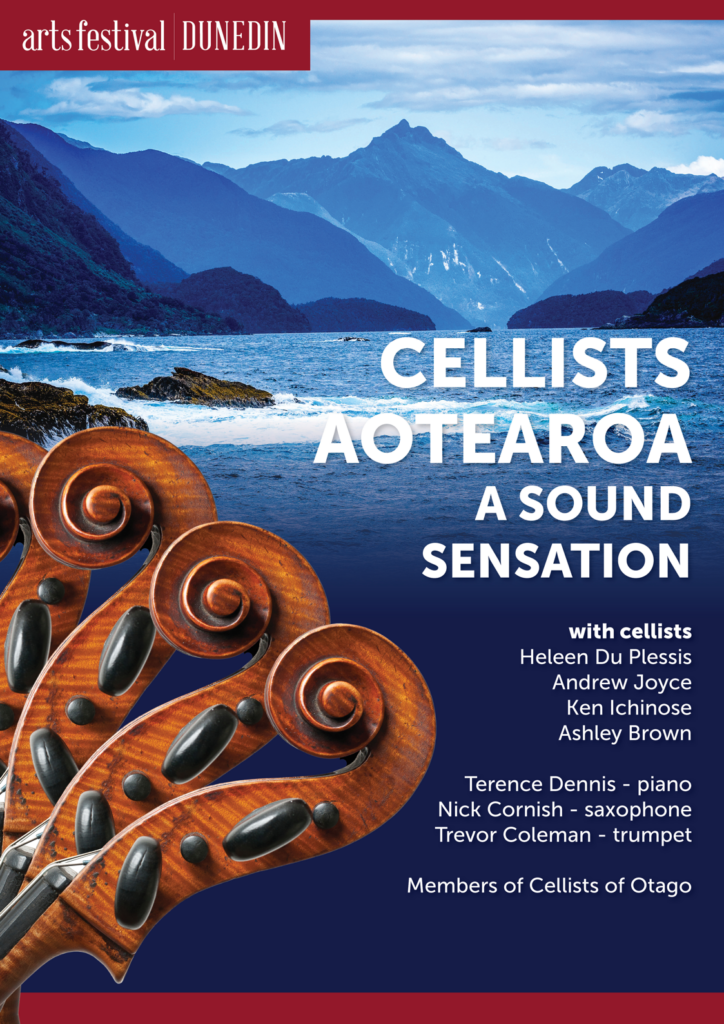
Where Cello for Africa is about reconnecting with roots, Cellists Aotearoa is about putting down new ones. Inspired by the landscapes, people, and culture of Aotearoa New Zealand, this multimedia production brought together newly commissioned music, landscape photography by Pieter du Plessis, poetry, and cello ensemble performance.
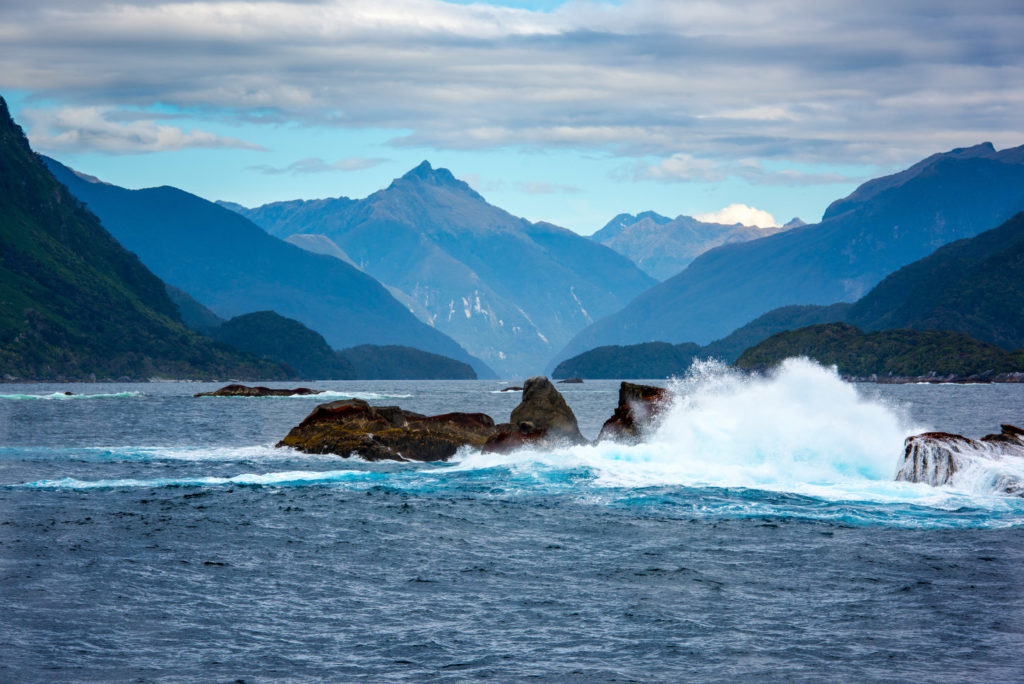
The commissioned works—Anthony Ritchie’s Purakanui, Trevor Coleman’s Doubtful Sound, and Corwin Newall’s Tūrangawaewae (A Place to Stand)—translated some of New Zealand’s most distinctive landscapes into sound, while Pieter’s photography provided a visual counterpart to the music. Together they created an immersive experience that invited audiences to engage with place through music, image, and story.

“People are their place and a place is its people.”
– E. Relph
Premiered at the Dunedin Arts Festival and performed by some of New Zealand’s leading cellists, the project explored ideas of multiple belonging in an increasingly globalised world. By bringing together music, landscape, poetry, and community, it created opportunities for connection and belonging, fostering a shared sense of place among performers and audiences alike.
“The mountains do not remember asking the forests to shelter birds with silent tongues and wings of bark.”
– From Camelot River – ‘Doubtful Sound’, Richard Reeve

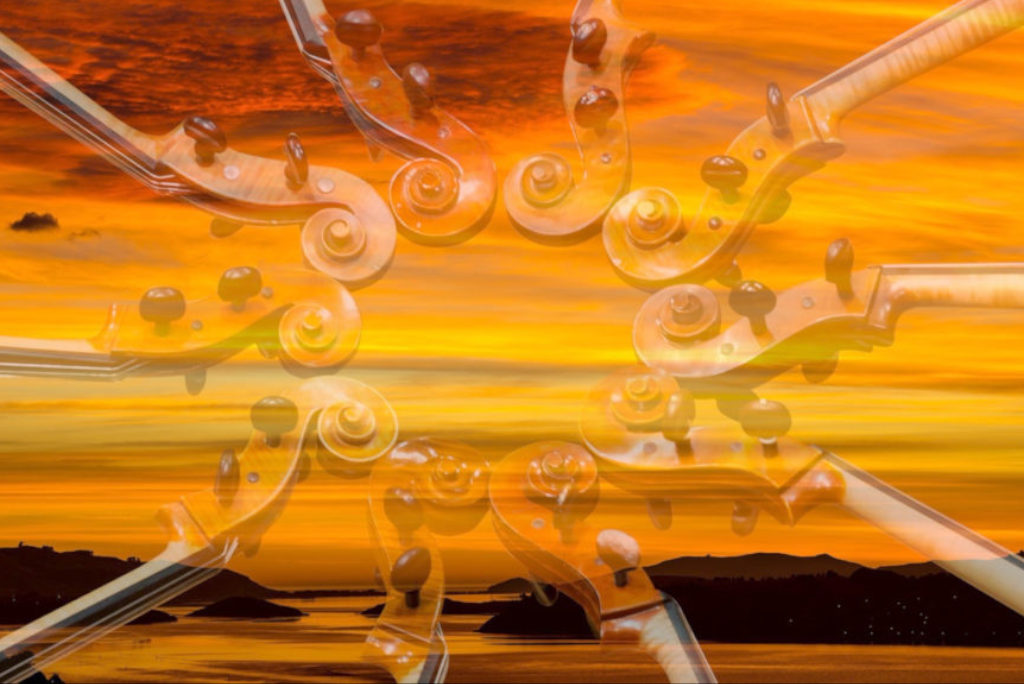
“Cello performance at its absolute best – a highlight of Arts Festival Dunedin. An extraordinary ensemble and extraordinary selection of works, flanked with glorious landscape photography by Pieter du Plessis.
“Superlative playing of a superlative programme. Producer Heleen du Plessis created a highly memorable and brilliant showcase of local talent”
— Otago Daily Times
Tahu-nui-ā-Rangi
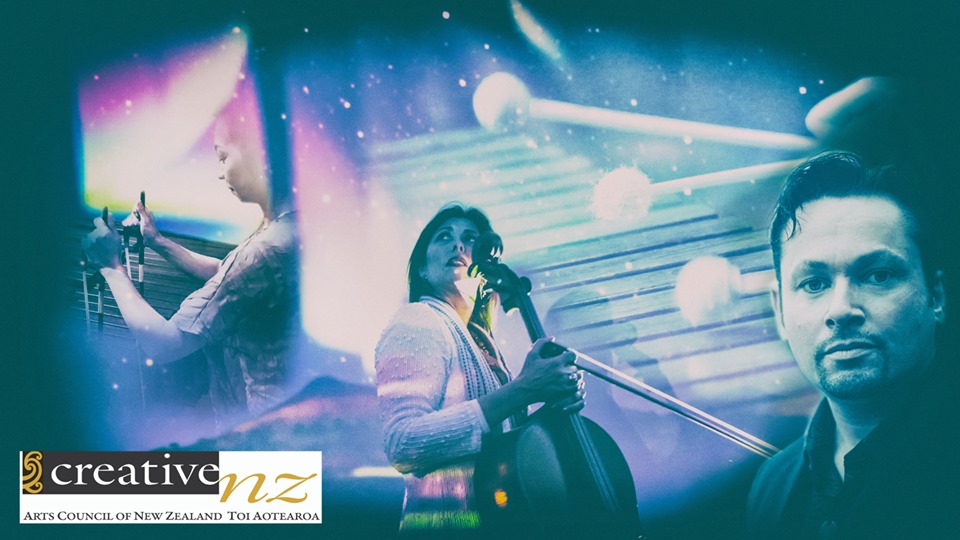
Written for Duo Col Legno and commissioned for marimba virtuoso Yoshiko Tsuruta and Heleen du Plessis, Gareth Farr’s Tahu-nui-ā-Rangi is the first work for cello and marimba by a New Zealand composer. Inspired by the Aurora Australis, the work draws on both scientific understandings of the southern lights and Māori traditions that view the aurora as the reflected campfires of ancestors in the sky.
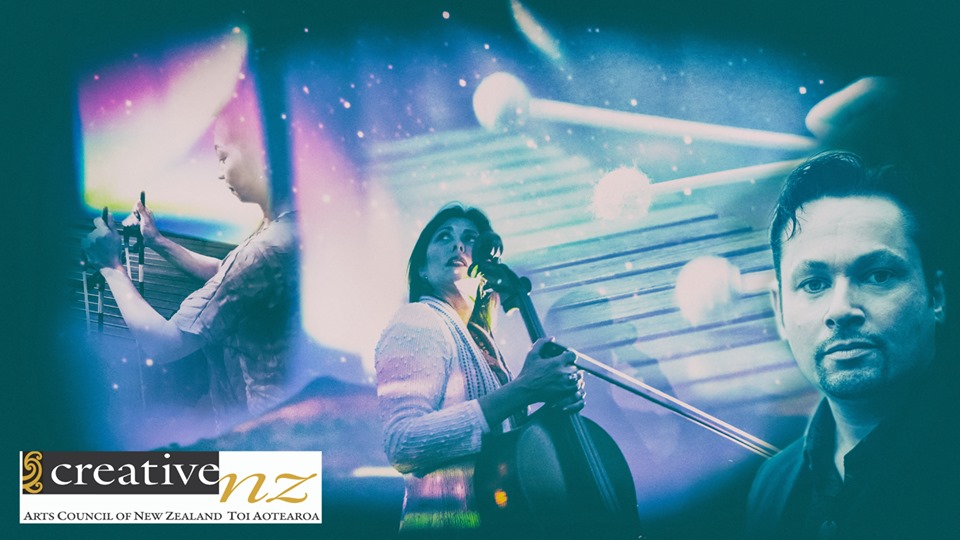
“The shimmering colours of the Aurora Australis danced overhead, as audience listened mesmerised to Gareth Farr’s beautiful musical rendition of the dancing “southern lights” during the world premiere of Tahu-nui-a-Rangi –it is awe inspiring to experience to dancing skies of the Aurora Australis, while listening to Farr’s shimmering composition.”
—The Star
Premiered in the Otago Museum Planetarium and accompanied by atmospheric lighting and visual imagery of the Aurora Australis, the performance created an immersive experience that brought together music, culture, philosophy, art, and science. Extending the journey from roots and belonging explored in earlier projects, Tahu-nui-ā-Rangi invites us to consider our connection not only to place and community, but to a wider universe of relationships, reminding us that we are ultimately part of one human family.
“Creating everything from low groans to percussive sounds with her bow, du Plessis showed the extraordinary versatility of the cello, while Tsuruta was in perpetual motion as she drew streams of bell-like tones from the marimba”
—The Star
“Performances by du Plessis and Tsuruta showed great mastery of their instruments and commitment to a rapturous interpretation of Farr’s music”
–Otago Daily Times
